Building in Public: 9 Nov–15 Nov 2026
A lot of this week was about making the machine’s life easier and the human’s life simpler: giving the GenAI tooling the context it lacks, iterating the Information product Design System so defaults stick, and naming things the way consumers actually think. The recurring lesson is that the gaps usually show up when someone else, human or agent, tries to use what I have built specifically to help me.
Everything I shared in Substack Notes last week, in one place. 24 notes.
AURA with Tim Frazer: a busy month
A recording worth a listen if you want a practitioner’s view of what has shifted in the data domain over the last month.
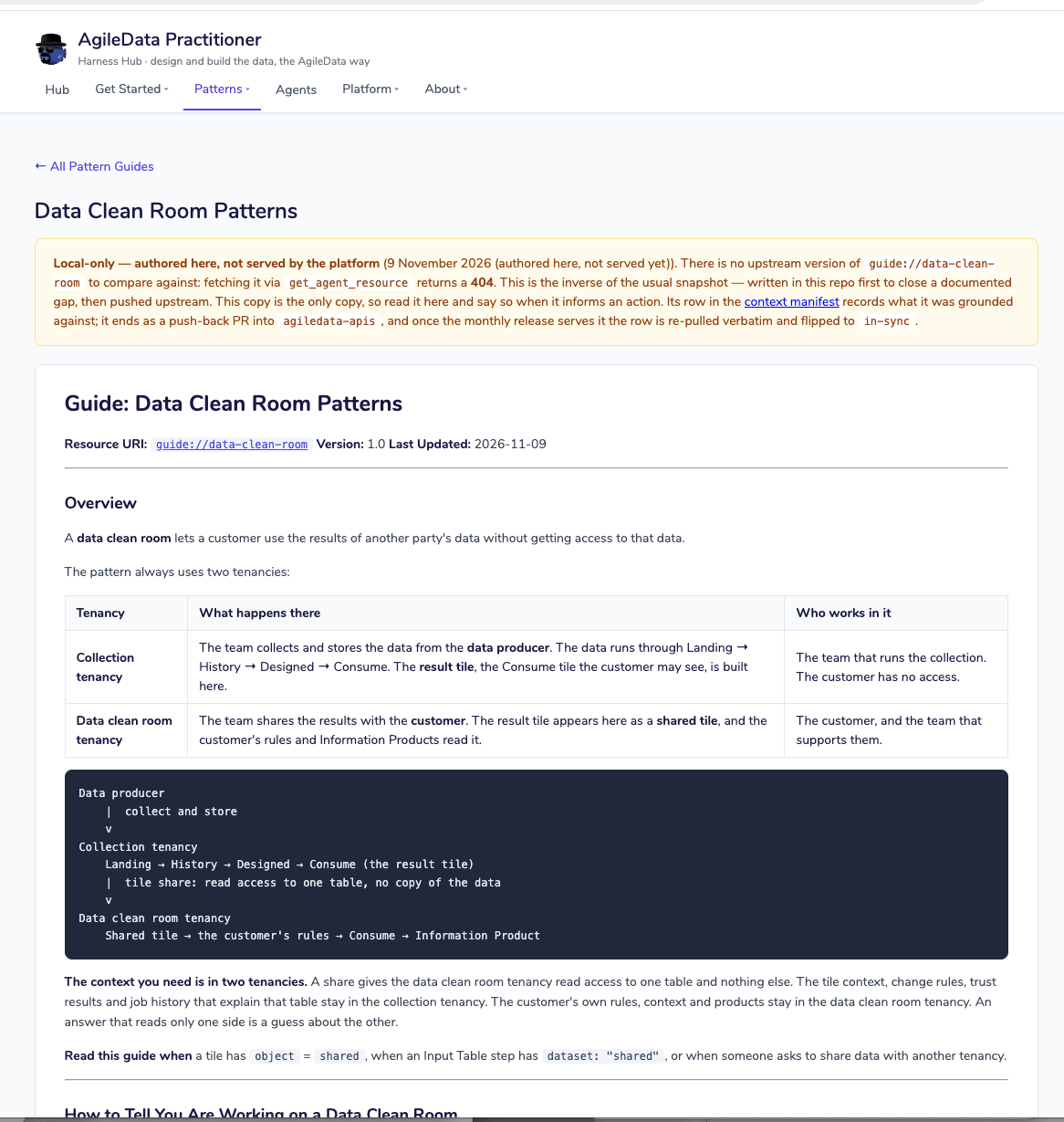
Writing guides surfaces hidden context gaps
Using AI to write guides exposes context humans carry in their heads, like tile meaning, that machines cannot see and so need written down.
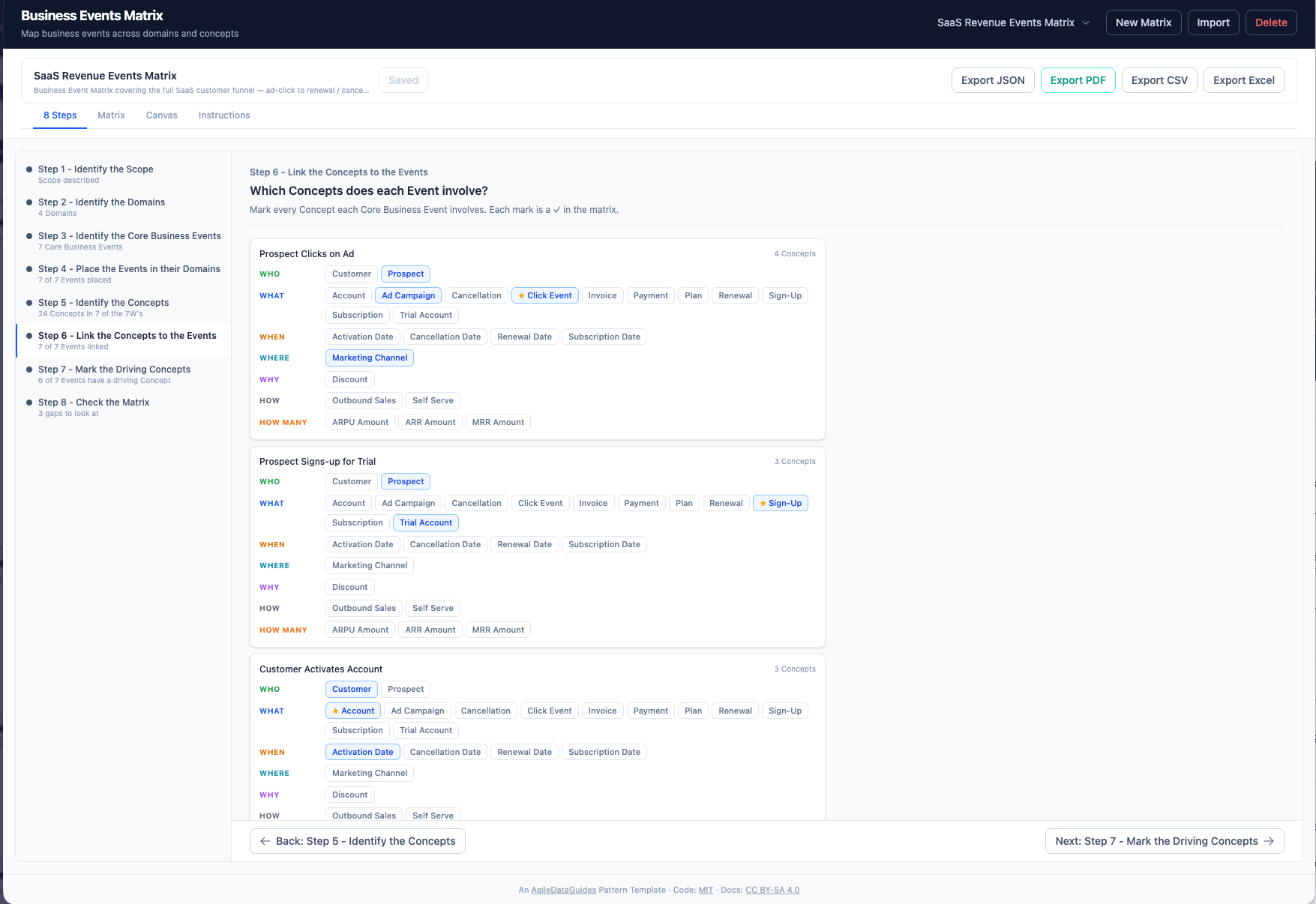
Step by step guide for Business Event Matrix
Experts forget how much implicit knowledge a tool needs, so guided wizards make a pattern template usable by people who did not design it.
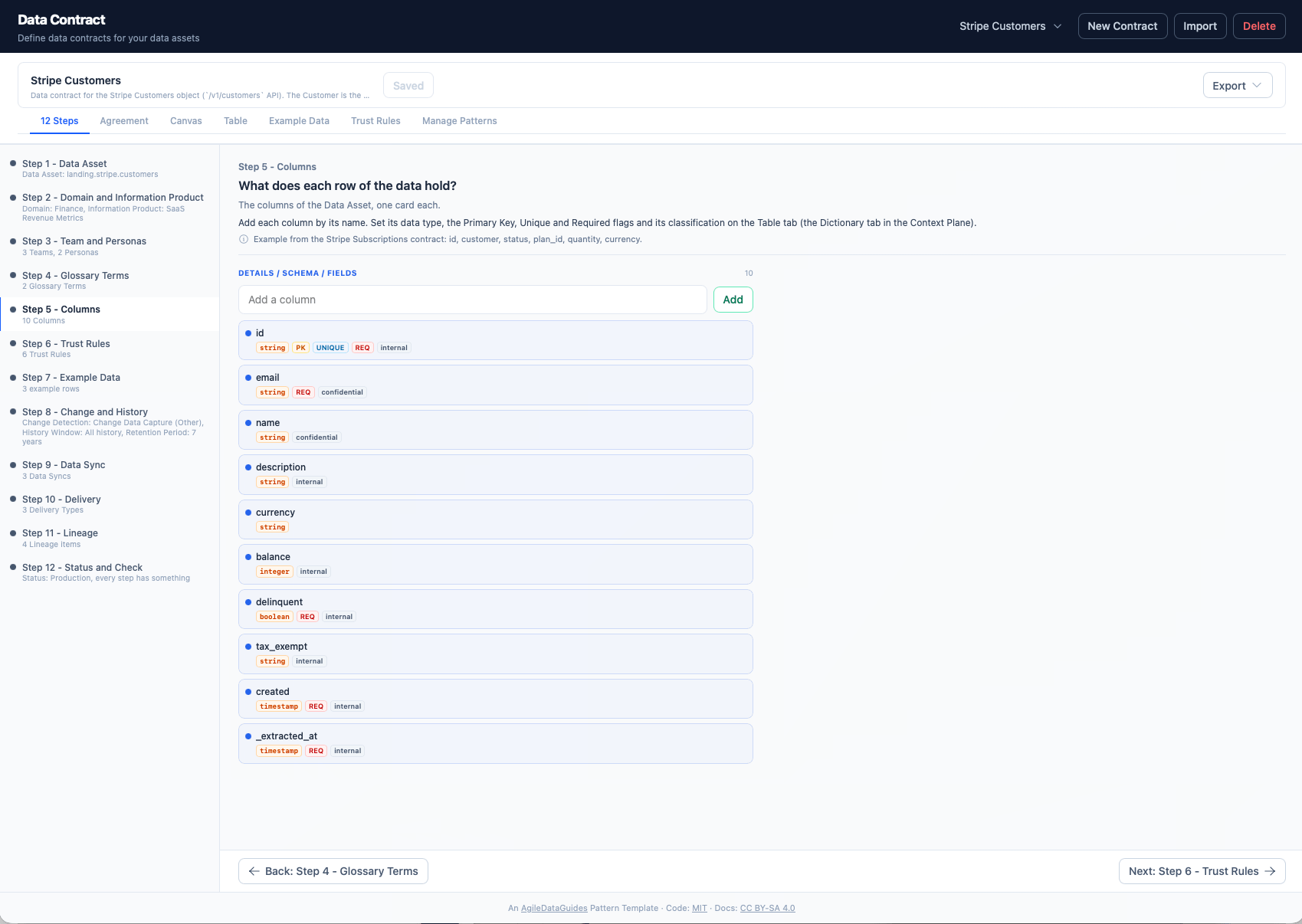
Data Contract template: is it valuable?
If you are not using something yourself, that is one of the easiest litmus tests that it may not hold much value.
T-shirt sizing explainer animation
A 60-second explainer on dropping detailed estimates nobody trusts in favour of t-shirt sizing, worth a look if estimating eats your time.
A new model release, which means more new capabilities to test against the work we are already doing.

Harnesses recognise work to hand off
Agent harnesses can now tell which work they can do and which belongs with a human, so a person in the loop may be enough for now.

Anchor Modeling podcast with Lars and Christian
A recording of a live podcast introducing the Anchor Modeling pattern with Lars Rönnbäck and Christian Kaul, worth a listen if the pattern is new to you.
Dynamic column headings in tables
Renaming column headings based on what an Information Consumer selects is a surprisingly useful feature of owning your own design system.

Running the model with minimal supervision raises the question of whether Mission Command patterns could get GenAI to do more, and better, work without me.
100 podcast episodes since 2019
Consistency over seven years, cheap equipment until it was needed and good advice from peers got the podcast to 100 episodes.
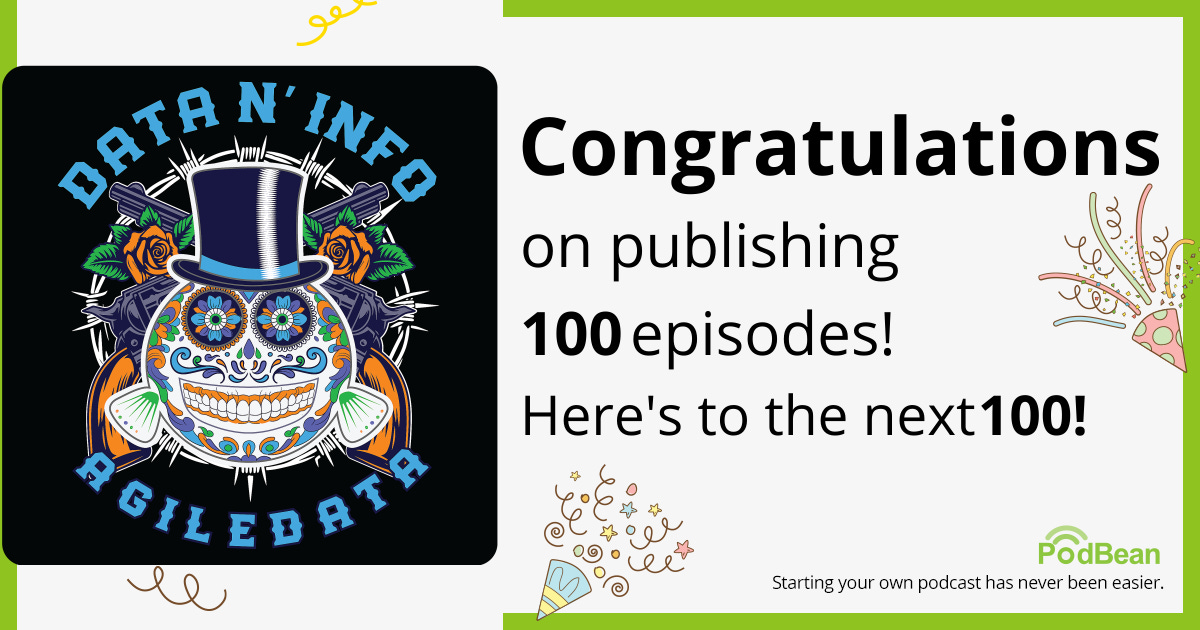
Design System defaults need to stick
When an agent built a page without the white card behind the table, the fix was to put that default in the Design System so it applies every time.
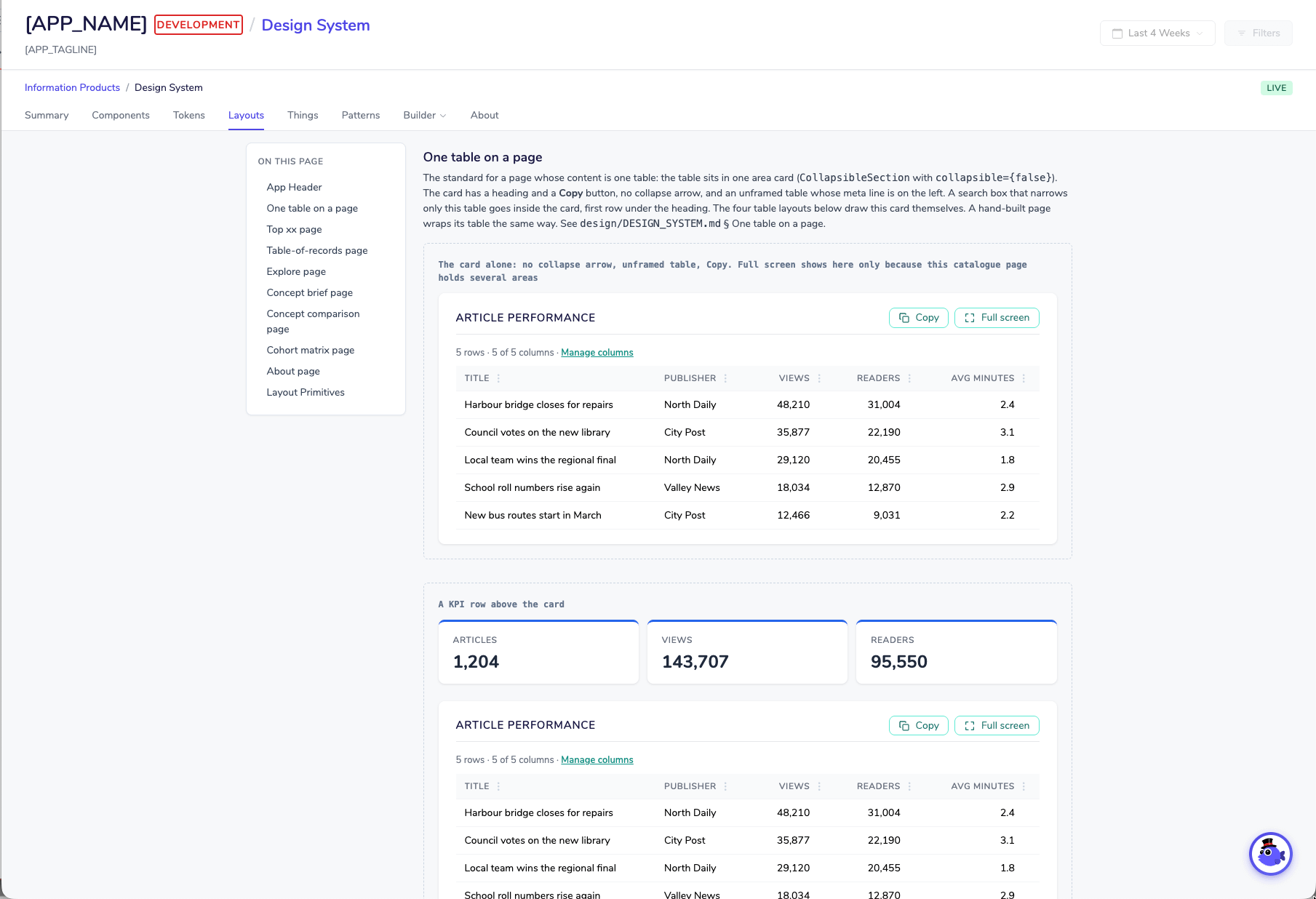
Four BI vendor patterns in the GenAI wave
BI vendors seem to be reimagining themselves as end-to-end platforms, Text to SQL, build-elsewhere-deploy-here, or last mile on MCP, though the categories need more thought.
Explaining patterns in 60 seconds
A good short explainer must draw a clear boundary for a pattern, what it is, what it isn’t and how to spot it, and I am still confused by these.
Toggle highlights and re-sorts the column
A small micro interaction that highlights the focus column and re-sorts the data when a toggle is selected.
Accumulating Snapshots explainer animation
The latest Done in 60 Seconds animation covers the Accumulating Snapshot pattern from Dimensional Modeling and is worth a look.
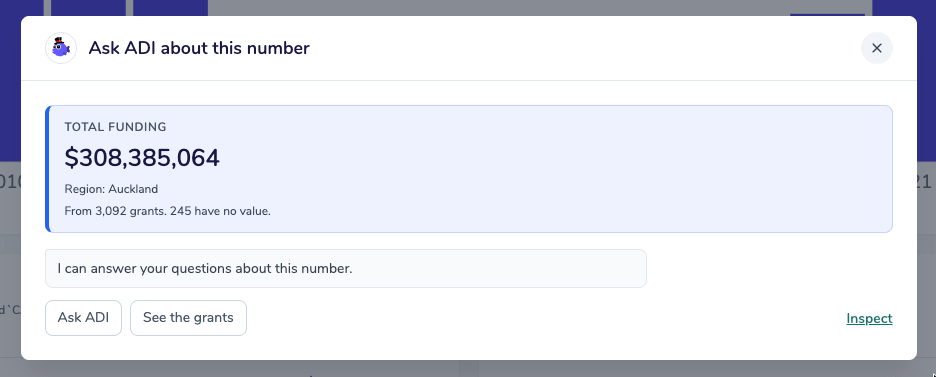
Claude doesn’t quite trust ADI
AI agents re-check each other’s answers much as human teams do, even when both draw on the same Context Plane.

Generating 5 to 10 quick mockups and taking them to stakeholders lets you find which parts solve the business problem before any prototype is built.
Stakeholders don’t care about the format
Like stakeholders with the data stack, I care about the answer, not whether it lives in a Claude Sheet, CSV or Excel.
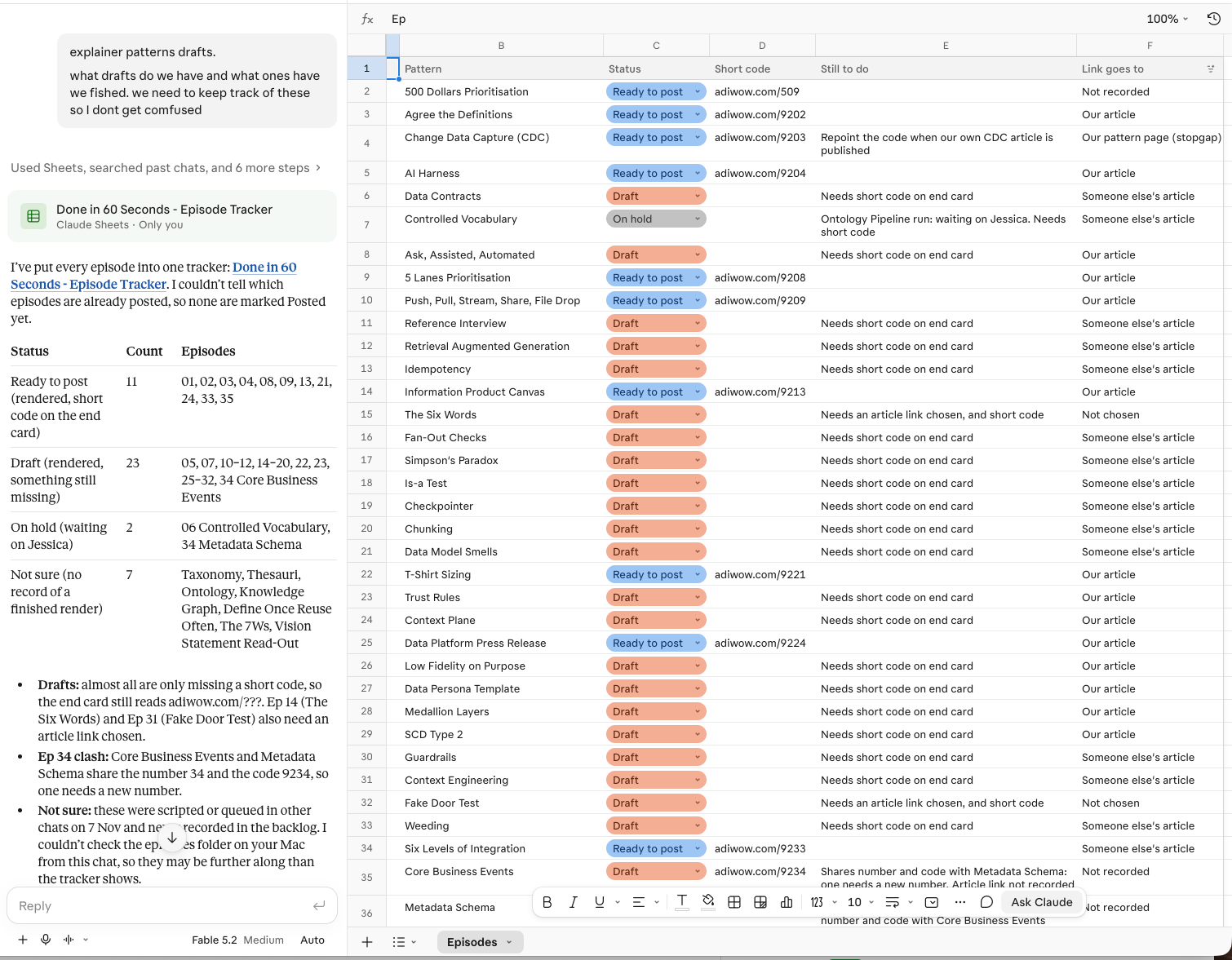
Hoyt’s DuckDB Substack and upcoming AURA
A share recommending Hoyt’s Substack for DuckDB coverage, plus a heads-up about the next AURA session.
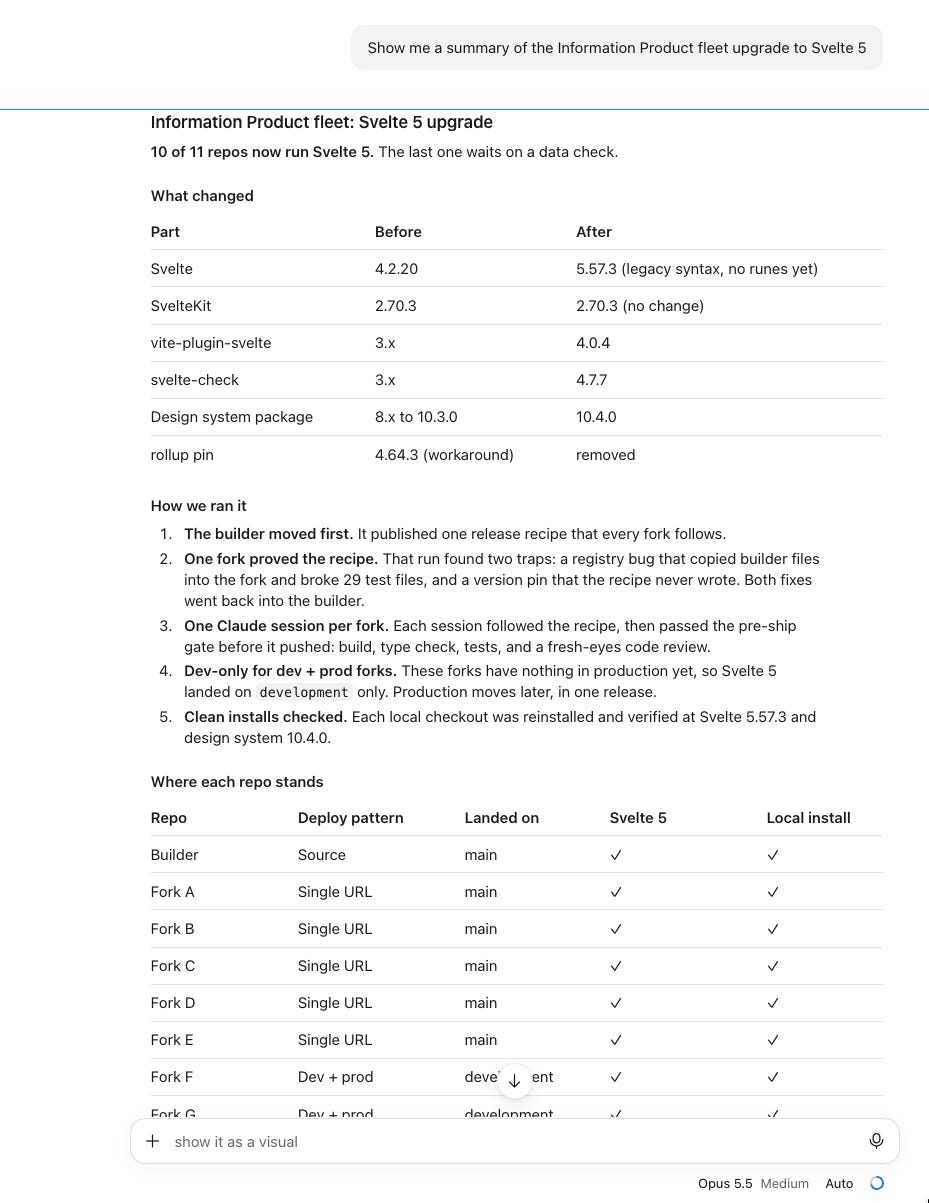
A day of AI-in-the-loop work upgraded several Information Product environments to Svelte 5, which once would have meant hiring help.
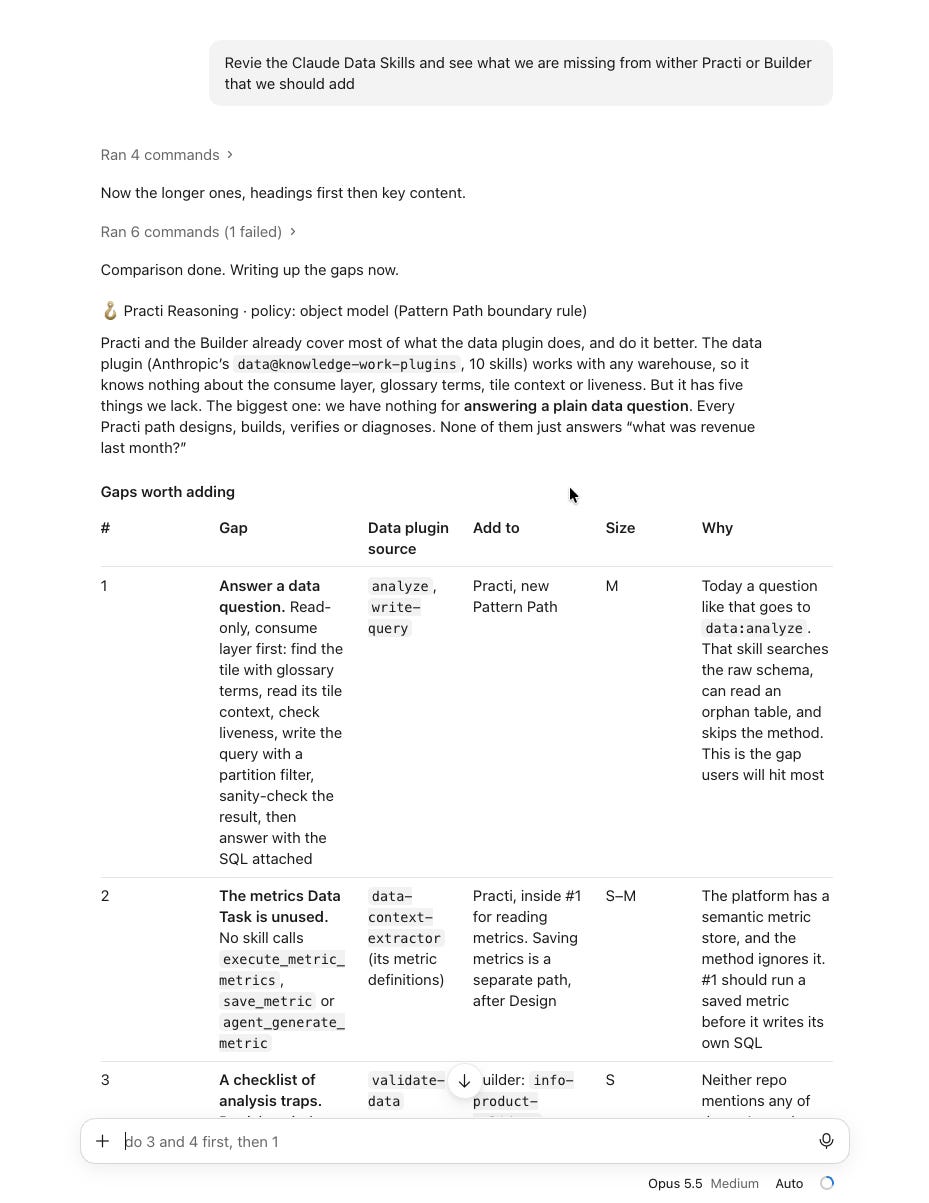
Comparing other people’s Skills to ours
Pointing Claude at someone else’s Skills and comparing them to your harnesses is a cheap way to find gaps, like prompts Practi couldn’t see.
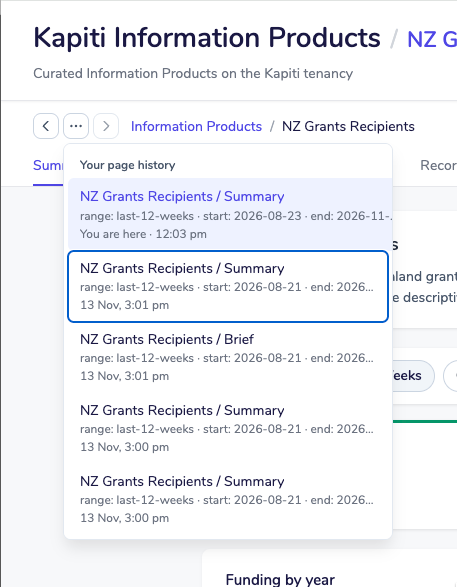
History navigation for Information Consumers
A customer request for moving back and forward through usage history, reapplying filters and toggles, turned out to be a feature worth building, with some UX questions left.
Consumers expected an explanation of what a number means to them, not how it is calculated, so the label changed, though I am not sure it is better yet.